
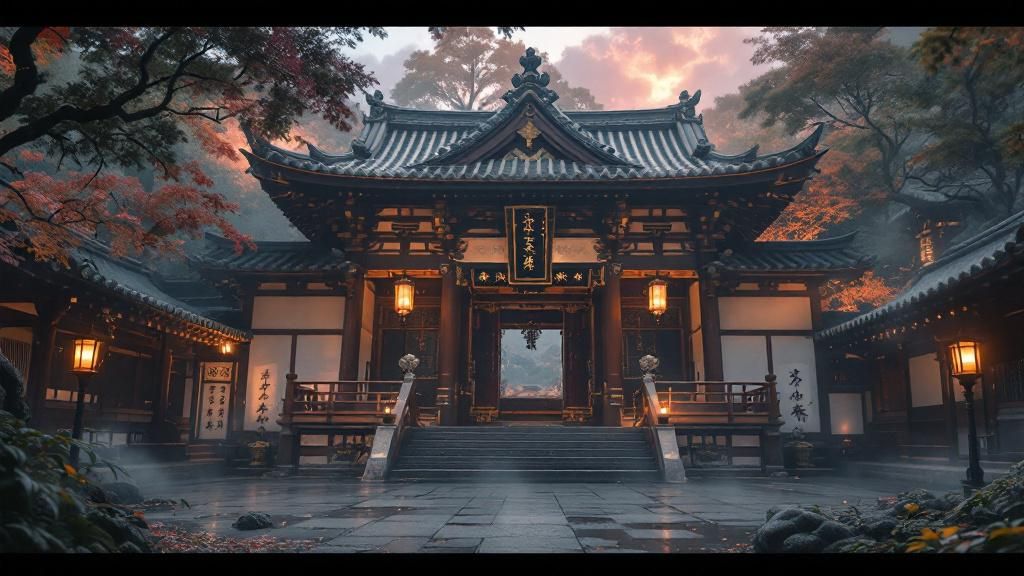
Rumiko Takahashi’s supernatural fantasy manga “Mao” is launching on streaming platforms across multiple territories this week, marking a significant milestone for the celebrated creator’s latest work. Viz Media has secured North American and select international streaming rights to the animated series, which launches on Hulu across the US on 4 April, whilst Disney+ will carry the series throughout Canada, Australia, New Zealand and Latin America starting the same day. The premiere coincides with the show’s launch on NHK General TV in Japan, with Hulu Japan doing the same from 5 April. The series is set for a uninterrupted two-cour run without interruption, delivering Takahashi’s dark fantasy tale of time-displaced students and age-old curses to audiences worldwide.
A Highly Acclaimed Manga Series Adaptation Captures the Attention of Global Audiences
“Mao” represents a notable expansion to the animated portfolio of the acclaimed creator, one of manga’s most decorated and commercially dominant figures. The distinguished author has earlier created some of the anime’s most cherished titles, including “this classic series,” “Ranma ½,” “another beloved series” and the hugely successful “Inuyasha.” She has won the prestigious award twice and holds membership in the esteemed Hall of Fame, establishing her legacy as a transformative force in manga storytelling throughout various periods and storytelling styles.
The anime series, produced by Sunrise, comes as part of celebrations marking publisher Shogakukan’s centenary year. Takahashi originally launched “Mao” in Weekly Shōnen Sunday in May 2019, and the manga has subsequently grown to 27 collected volumes as of February 2026. Viz Media, which has maintained the North American English-language manga license since 2021, started distributing simultaneous English chapters in tandem with Japanese publication in May 2023, guaranteeing international readers stayed up to date with the continuing story.
- Directed by Teruo Sato, who directed “Yashahime: Princess Half-Demon” Season 1
- Series composition by Yuko Kakihara with character design by Yoshihito Hishinuma
- Continuous two-cour run without midseason breaks planned for viewers
- Part of the expanded “Rumic World” universe of Takahashi’s works
The Tale Within Mao’s Dark Fantasy World
“Mao” represents a compelling dark fantasy that blends two distinct eras into a unified story. The series derives power from the clash of modern-day Japan with the historical Taisho era, producing an evocative setting where historical curses and contemporary anxieties converge. This dual timeline permits the author to investigate identity, fate, and the supernatural elements that shape human existence over generations. The manga’s sprawling narrative has resonated with readers from its beginning, establishing itself as one of the author’s grandest creations in scale and thematic depth.
The mystical elements at the core of “Mao” are rooted in Japanese mysticism and folklore, particularly through the figure of the onmyoji—a traditional spiritual practitioner knowledgeable about esoteric arts. The series balances action-driven sequences with moments of character introspection, enabling audiences to connect emotionally with protagonists grappling with forces beyond their grasp. Takahashi’s signature storytelling approach—mixing humour with genuine tension and emotional resonance—unfolds throughout the narrative, creating a viewing experience that appeals to both dedicated fans of her work and newcomers discovering her unique approach for the first time.
Nanoka’s Journey Through Time and Enchantments
At the tale’s centre, features Nanoka Kiba, a junior high student whose life takes a dramatic turn when she is mysteriously transported back to the Taisho era of Japan. This shift across centuries happens after she revisits the retail arcade where she survived a mysterious and traumatic accident eight years prior. The incident acts as the catalyst for her remarkable adventure, forcing Nanoka to confront suppressed memories and discover the facts surrounding the perplexing situations related to her survival in childhood and her unexpected journey between time periods.
Once transported to the Taisho era, Nanoka meets Mao, a solitary onmyoji practitioner who has endured nine centuries of existence whilst burdened by a life-changing curse of devastating proportions. Their introduction proves deeply transformative for both characters, as Mao’s probing inquiries compel Nanoka to reconsider her own peculiar existence from entirely new perspectives. Together, they form an uneasy alliance driven by necessity, uniting their efforts to face the dark supernatural forces that have become inextricably entangled with their respective fates and destinies.
Takahashi’s Legacy and the Rumic World Sensation
Rumiko Takahashi stands as one of manga’s most celebrated and commercially dominant figures, whose impact upon the medium extends over decades and keeps shaping contemporary storytelling. Her body of work, collectively known as the “Rumic World,” includes some of the most beloved and culturally significant manga series ever written. From “Urusei Yatsura” to “Ranma ½,” “Maison Ikkoku” and the phenomenally successful “Inuyasha,” Takahashi has displayed an remarkable talent to develop plotlines that appeal to generations. Her distinctive blend of wit, romance, adventure and emotional richness has earned her a loyal international following and established her as a creative force whose effect stretches far beyond manga into animation, live-action versions and cinema.
The appreciation Takahashi has earned throughout her career underscores her exceptional contributions to the medium. She has won the prestigious Shogakukan Manga Award on two occasions, establishing her status among manga’s elite creators. Beyond commercial success, Takahashi achieved the singular honour of induction into the Eisner Award Hall of Fame, a distinction bestowed upon those whose work has fundamentally influenced the industry. Her sustained talent to advance imaginatively whilst preserving her characteristic creative voice has allowed her to continue engaging and acclaimed across multiple decades, making her an enduring icon whose work continues to inspire creators and captivate audiences worldwide.
| Manga Title | Award Recognition |
|---|---|
| Urusei Yatsura | Shogakukan Manga Award (1981) |
| Ranma ½ | International acclaim and commercial success |
| Maison Ikkoku | Critical praise for romantic storytelling |
| Inuyasha | Shogakukan Manga Award (2002) |
| Mao | Part of Shogakukan’s centenary celebration |
- Takahashi’s works have been adapted into numerous anime series, live-action productions and cinema releases.
- Her storytelling expertly combines supernatural elements with character-focused storytelling and emotional complexity.
- The “Rumic World” serves as a unified artistic world covering multiple genres and time periods.
Creative Vision and Production Quality
The anime interpretation of “Mao” benefits from a creative ensemble with proven expertise in bringing Takahashi’s otherworldly stories to life. Director Teruo Sato, who previously helmed the critically praised “Yashahime: Princess Half-Demon” Season 1, takes the helm for this new series, bringing his established understanding of the “Rumic World” to the endeavour. Working alongside him is series composer Yuko Kakihara, whose storytelling instincts correspond excellently with the dark fantasy elements that characterise “Mao.” The artistic collaboration between these experienced creators ensures that the interpretation captures both the atmospheric tension and emotional nuance inherent in Takahashi’s original manga.
Character design and chief animation direction fall to Yoshihito Hishinuma, a seasoned veteran of “Yashahime” and “Inuyasha,” whose deep knowledge of Takahashi’s distinctive visual style proves invaluable. The production is overseen by Sunrise, a studio celebrated for its technical excellence and dedication to animation excellence. The decision to run “Mao” as a continuous two-cour broadcast without a midseason break demonstrates the creative team’s confidence in the material and their commitment to preserving storytelling momentum throughout the series. This uninterrupted storytelling approach allows viewers to experience the supernatural epic in its most unified form, ensuring that the tension and character development remain consistently engaging.
Voice Cast and Musical Accompaniment
Whilst information about the voice cast stay undisclosed, the production team’s proven history suggests that Takahashi’s characters will be given to talented actors capable of conveying the emotional complexity demanded by her writing. The soundtrack, a vital element of any supernatural anime, will be instrumental in establishing the atmospheric tone that distinguishes “Mao” from traditional fantasy stories. The combination of seasoned performers and a meticulously designed soundtrack should work in tandem to create an engaging world that honours Takahashi’s vision whilst delivering the production values modern viewers expect from a significant streaming title.
International Release Plan and Streaming Availability
“Mao” releases at the same time across multiple territories on 4 April, representing a coordinated global release strategy that underscores the series’ importance within the anime sector. In the US, Hulu obtains sole streaming access, whilst Disney+ claims dominion over Canada, Australia, New Zealand and Latin America. This multi-platform distribution approach guarantees international audiences obtain rapid entry to the paranormal series, minimising the conventional hold-ups that have traditionally affected anime releases beyond Japan. The phased rollout across different streaming services reflects the intricate rights agreements that define contemporary anime releases, with Viz Media’s acquisition of North American and chosen regional rights establishing the firm as a crucial intermediary between Japanese producers and Western audiences.
Japan’s domestic programming timetable sees “Mao” premiere on NHK General TV on the identical day as its international rollout, with Hulu Japan beginning its stream from 5 April. The decision to broadcast the series as a unbroken two-season stretch—covering roughly 50 episodes—uninterrupted shows confidence in audience engagement and storytelling pace. This continuous airing format contrasts sharply with the traditional seasonal model preferred by many anime productions, allowing viewers to experience Takahashi’s dark fantasy in an seamless storytelling experience. Such a distribution approach indicates that producers anticipate sustained viewer interest, positioning “Mao” as a marquee offering worthy of premium placement on streaming services across all participating platforms.
